Residential • Multifamily • Commercial • Multi-Meter
Electrical Service Upgrades
Electrical service upgrades are often needed because existing equipment is obsolete, damaged or too small for the building. In other cases, an upgrade is planned because the property needs more electrical capacity for remodeling, electrification or future use.
Chasov Electric performs residential, multifamily and commercial service upgrades in San Francisco, including 200A residential services, larger building services, multi-meter equipment and PG&E coordination.
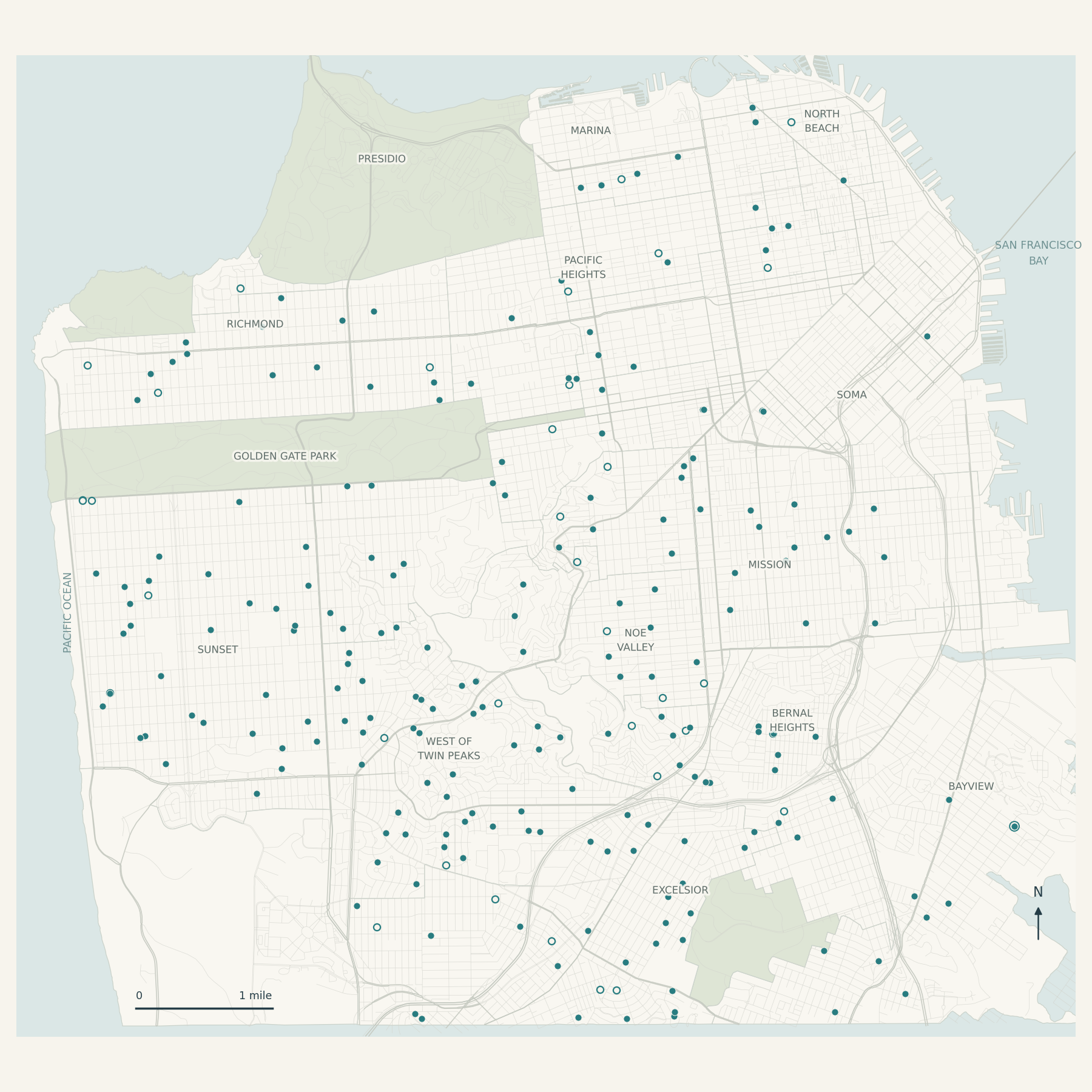
Service upgrades & equipment work
251 selected completed electrical permits in San Francisco.
Part of our 1,700+ San Francisco electrical permits.
- Service upgrade recorded
- Other service equipment & repairs
An outer ring around a filled dot indicates both classes at that location. Repeated permits share a dot; not all service equipment work increases capacity.
Sources: DataSF electrical permits, street centerlines and analysis neighborhoods. Snapshot: September 9, 2026. “Complete” is the electrical-permit status, not proof of whole-project completion.
What Is an Electrical Service?
Your electrical service is the connection that brings power from PG&E's system into your building and delivers it to the main electrical equipment.
With an overhead service, power comes from the utility pole to the building and then through the service entrance to the meter and main equipment.
With an underground service, PG&E conductors run underground to the building's meter or service equipment.
Customers often use terms such as main panel, meter panel, meter-main, electrical panel or service panel when describing this part of the electrical system. The terms are not always technically identical, but they frequently refer to overlapping parts of the same project.
When Is a Service Upgrade Needed?
Existing Equipment Needs Replacement
Older San Francisco buildings can still have very small electrical services, fuse equipment, obsolete panels, old meter-main equipment or deteriorated service components.
Sometimes the main breaker is built into the same equipment that needs to be replaced. In that situation, what initially sounds like a panel replacement can become a complete service project.
If major residential service equipment already needs replacement, we normally evaluate whether it makes sense to install a modern 200A service rather than rebuild another limited-capacity system.
30A to 200A Residential Service Upgrade
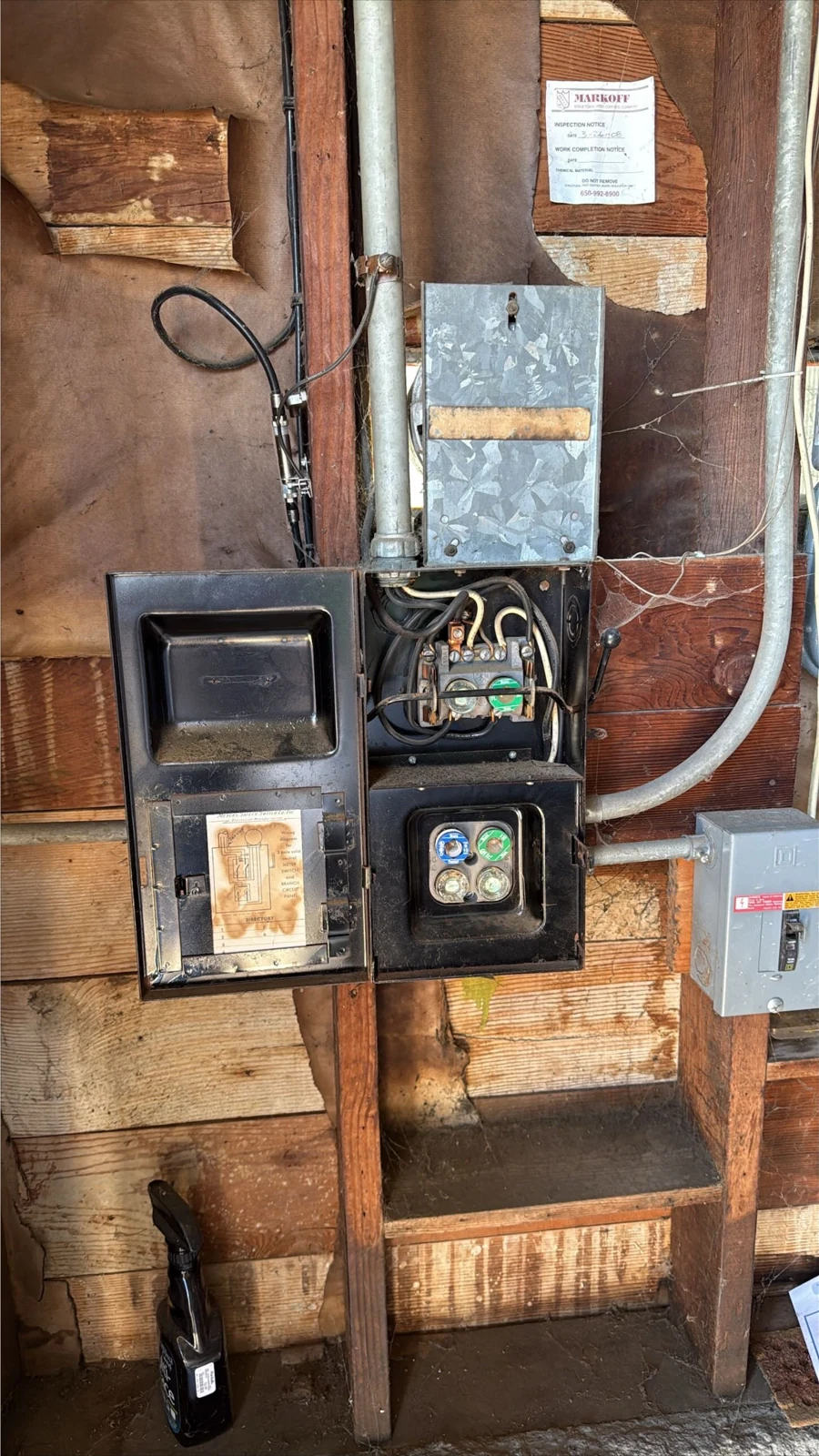
Before
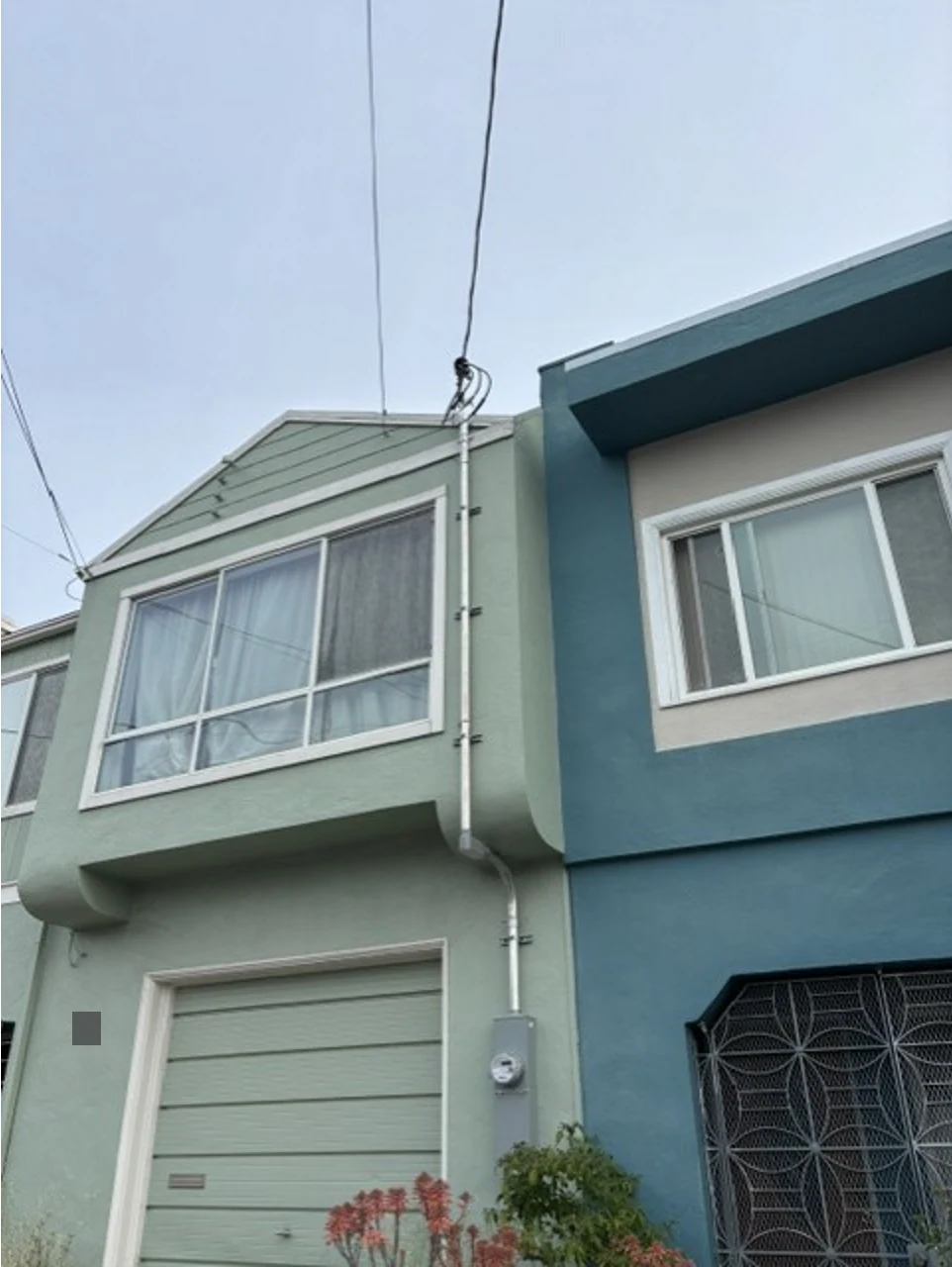
After
Existing 30A service replaced with a new 200A overhead residential service, including new meter equipment and service entrance.
The Existing Service Is Too Small
A building may simply have outgrown its electrical service.
Kitchen remodeling, EV charging, electric cooking, heat-pump water heating, heat pumps, additions, ADUs or increased commercial loads can all increase electrical demand.
A 100A service does not automatically need to be replaced. Many San Francisco homes can still operate adequately on 100 amps, particularly where heating, water heating and cooking remain gas. We look at the existing load and what the owner plans to add before recommending an upgrade.
The Property Is Being Modernized
Sometimes the existing service still works, but the owner is planning significant future electrical use.
If major work is already underway and the property may later add EV charging, electric cooking, water heating or heating, upgrading the service at the same time can be more practical than modifying the system repeatedly in the future.
Panel Replacement or Service Upgrade?
A panel replacement usually means replacing an electrical distribution panel while keeping the existing service capacity.
A service upgrade involves the equipment supplying the property and may also increase the available electrical capacity.
Sometimes the two overlap. An older Federal Pacific panel, for example, may also contain the main service disconnect. Replacing that equipment can involve the service itself rather than just an interior panel.
Our first step is to determine whether the property needs a panel replacement, a service upgrade or both.
100A or 200A?
A functioning 100A service may still be adequate for many San Francisco homes. The answer depends on the condition of the existing equipment, the electrical demand of the house and what new equipment is being added.
One EV charger, by itself, does not always require a 200A service. In some situations, charging rate or load-management options can help avoid an unnecessary upgrade.
When several major electric loads are being added, or when old service equipment already needs replacement, a 100A-to-200A service upgrade often becomes the more practical long-term solution.
Residential, Multifamily and Commercial Service Upgrades
For a typical house, a service upgrade may involve replacing older 60A or 100A equipment with a modern 200A service.
For apartment and condominium buildings, the project can involve multiple meters, house loads, unit feeders, meter banks and larger main distribution equipment.
Commercial projects may involve larger services, tenant loads, switchboards, new feeders and scheduled shutdowns.
For residential properties, a common upgrade is to a modern 200A service. Multifamily and commercial projects can require larger 400A, 600A or 1,000A services depending on the building and load.
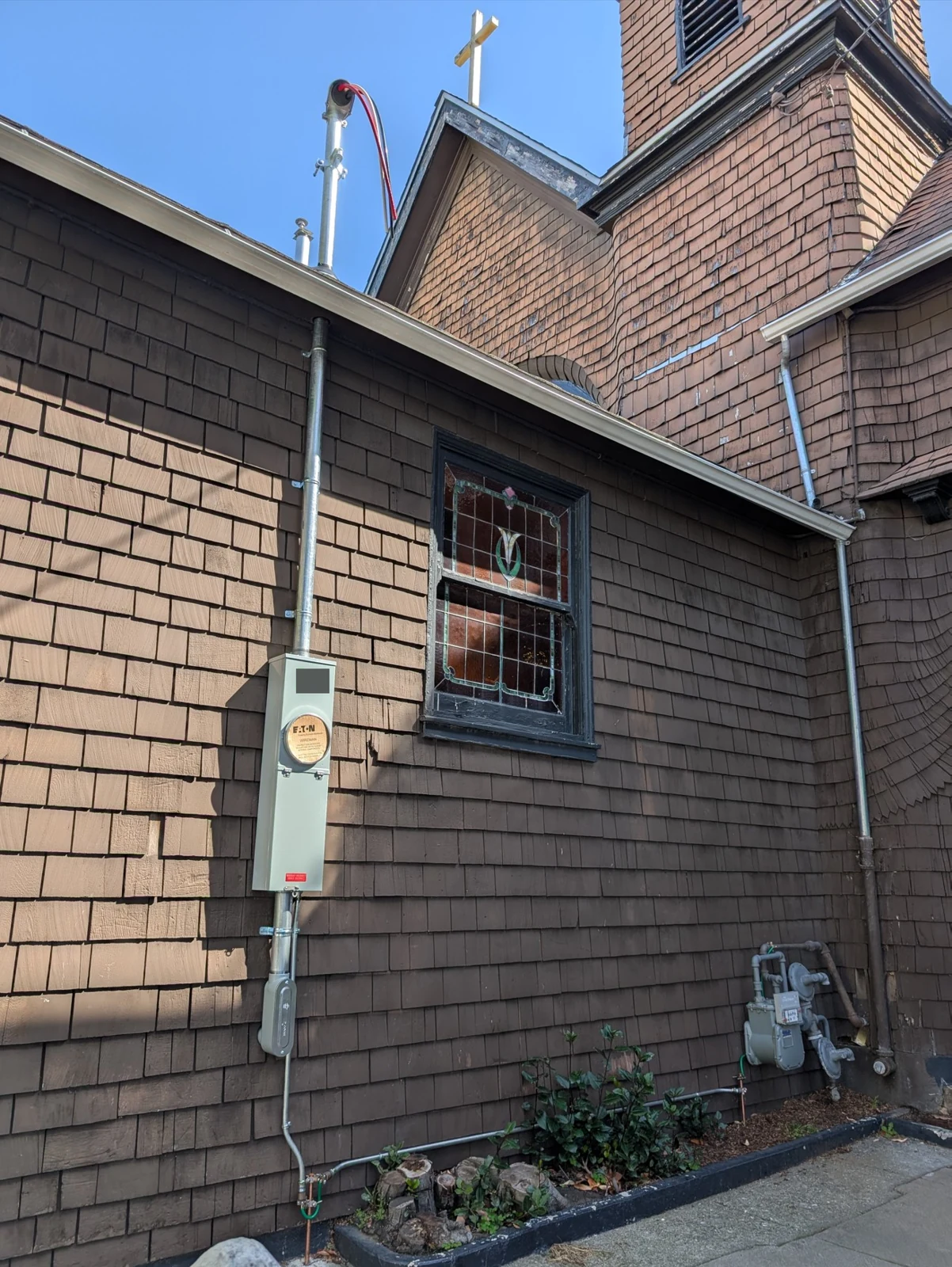
200A Service Upgrade — Church
New 200A overhead electrical service with exterior meter equipment, service riser, grounding and PG&E coordination.
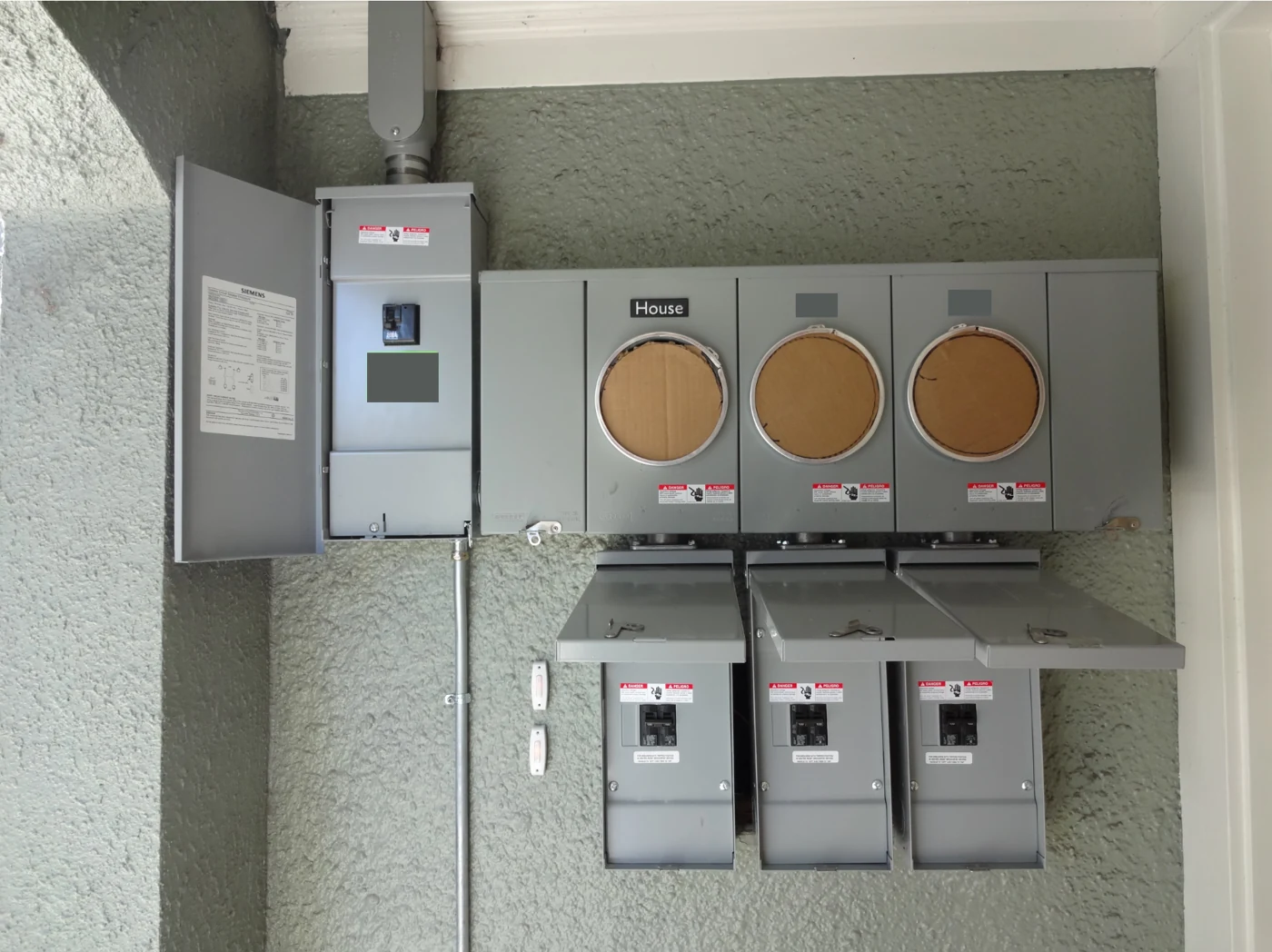
200A Multi-Meter Service — Two Units + House
New 200A service with separate meters and disconnects for two dwelling units and the house/common-area load.
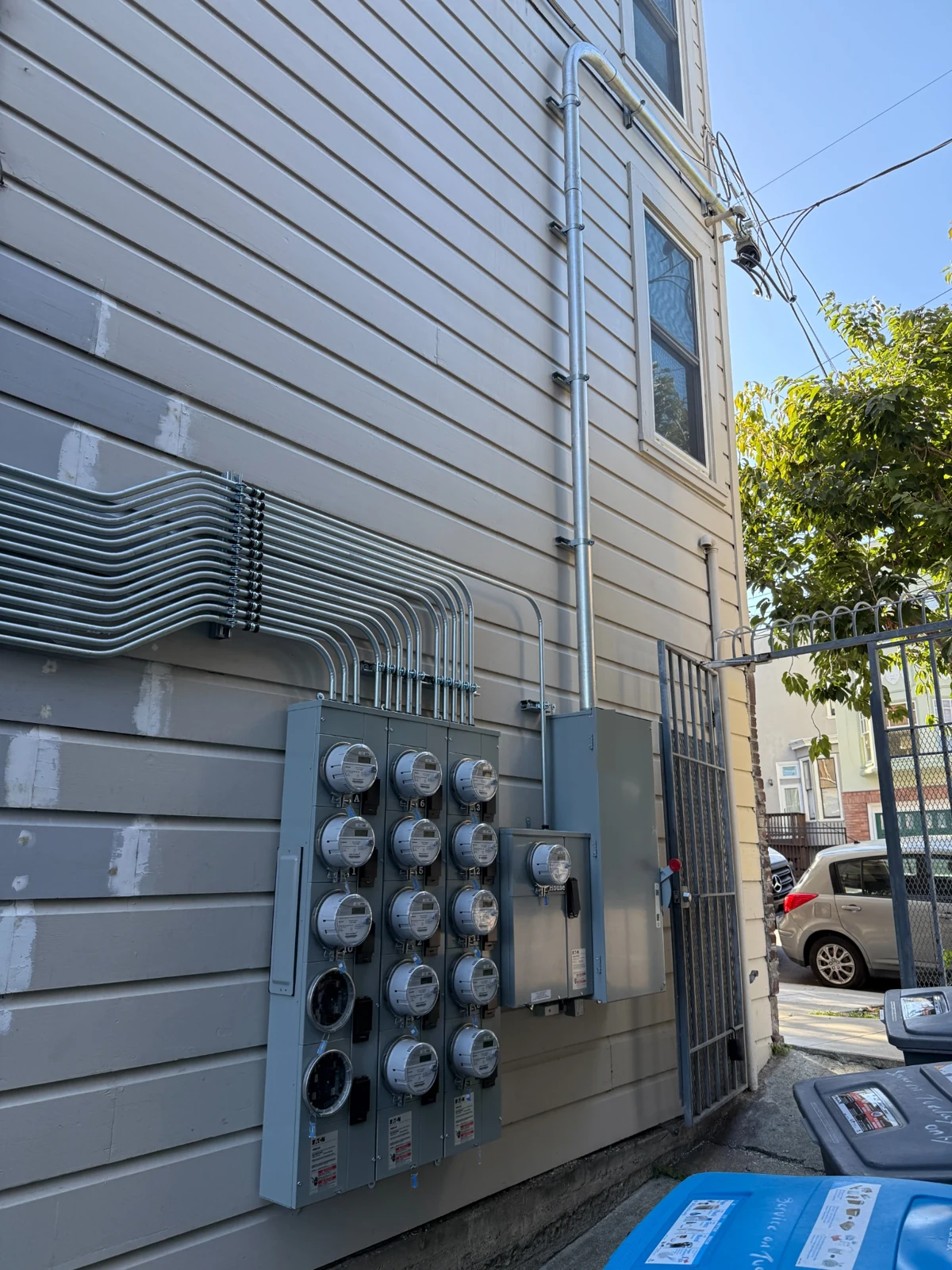
400A Overhead Multi-Meter Service
New 400A overhead service with multiple tenant meters, a house meter, main service equipment and new distribution raceways.
Apartment buildings often require much more than a single meter and panel. A service upgrade may involve multiple tenant meters, a house meter, larger main equipment and coordination of the existing unit feeders. Chasov Electric performs this type of multi-meter service work in occupied San Francisco buildings.
PG&E Coordination
Electrical service upgrades usually require coordination with PG&E.
Chasov Electric can handle the PG&E application and project coordination on the owner's behalf.
We review the existing service, determine the proposed service size, submit the application, work with PG&E on the service and meter location, obtain the electrical permit, complete the electrical installation, coordinate inspection and work with PG&E through the required disconnect and reconnect.
PG&E also determines whether its existing utility equipment can support the requested service. If utility-side work is required, PG&E develops that part of the project.
Meter Location in San Francisco
Finding an acceptable meter location can be one of the more difficult parts of a San Francisco service upgrade.
Older buildings often have very limited exterior wall space. Gas meters, windows, stairs, garages, property lines and existing architectural conditions can all affect where new equipment can be installed.
PG&E generally wants residential meters in an accessible location, but not every building has the same solution. Existing-location provisions, approved meter rooms and other PG&E-approved arrangements can apply depending on the property.
We review these conditions and work with PG&E to determine an acceptable service and meter arrangement before installation.
Overhead and Underground Service
The project also depends on how PG&E serves the property.
With an overhead service, the work can involve the building attachment, weatherhead, service riser and new meter equipment.
With an underground service, the project can involve underground conductors, conduit, service termination equipment and coordination with existing utility facilities.
Both types of service require an approved final arrangement.
Service Upgrades in Occupied Buildings
Many service upgrades take place in occupied homes, apartment buildings and operating businesses.
The work can require shutdown planning, resident or tenant coordination, inspections and PG&E scheduling. For multifamily and commercial properties, we plan the sequence around the building so that the installation can be completed with the least practical disruption.
Frequently Asked Questions
Do I automatically need 200 amps if I have 100 amps?
No. A 100A service may still be adequate depending on the building's electrical demand, the condition of the equipment and what is being added.
Is a panel replacement the same as a service upgrade?
No. A panel can sometimes be replaced without increasing the service capacity. If the main service equipment is involved, the work may become a complete service project.
Do I need a service upgrade for an EV charger?
Not always. The existing capacity, charging rate and possible load-management options should be evaluated first.
Does PG&E have to be involved?
For work involving the utility service, meter equipment, increased capacity or disconnect and reconnect work, PG&E coordination is normally required.
Can Chasov Electric handle the PG&E application?
Yes. We can prepare and manage the PG&E application and coordinate the electrical portion of the project.
Request an estimate
Tell Us What You’re Planning
If you are considering a service upgrade, panel replacement, EV charger, major remodel or future electrification, tell us what you have now and what you are planning. If available, photos of the meter, main panel and surrounding area are helpful.