
Electrical panel replacement
Understand your panel, why replacement may be requested, and what the work involves.
An insurance notice, damaged equipment, a full panel or a closet location can each call for a different solution. The starting point is the exact equipment and its condition.
Six types worth a closer look.
These are examples, not a blanket list of recalled or unsafe panels. Brand, model, installed breakers and condition all matter.
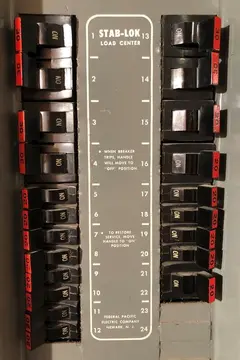
Federal Pacific
FPE Stab-Lok
Frequently flagged by insurers because of concerns about breakers failing to trip. We identify the equipment and review the requested correction.
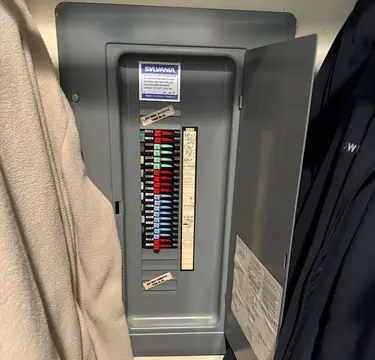
Zinsco &
Sylvania-Zinsco
Connection damage and overheating are key concerns. The Sylvania name alone does not identify a Zinsco-type panel.
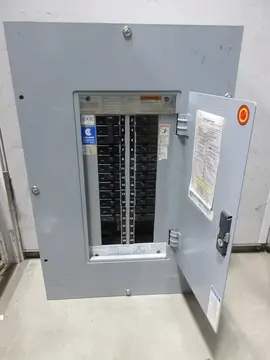
Challenger
The 1988 recall covered specific GFCI breakers, not every Challenger panel. Equipment condition and the insurer’s written requirements need separate review.
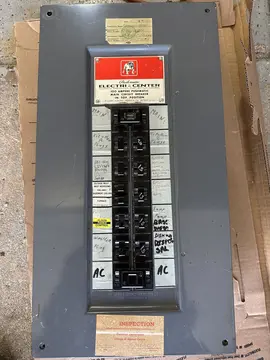
Pushmatic & Bulldog
We assess condition, suitable equipment options and insurance requirements before recommending a replacement scope.
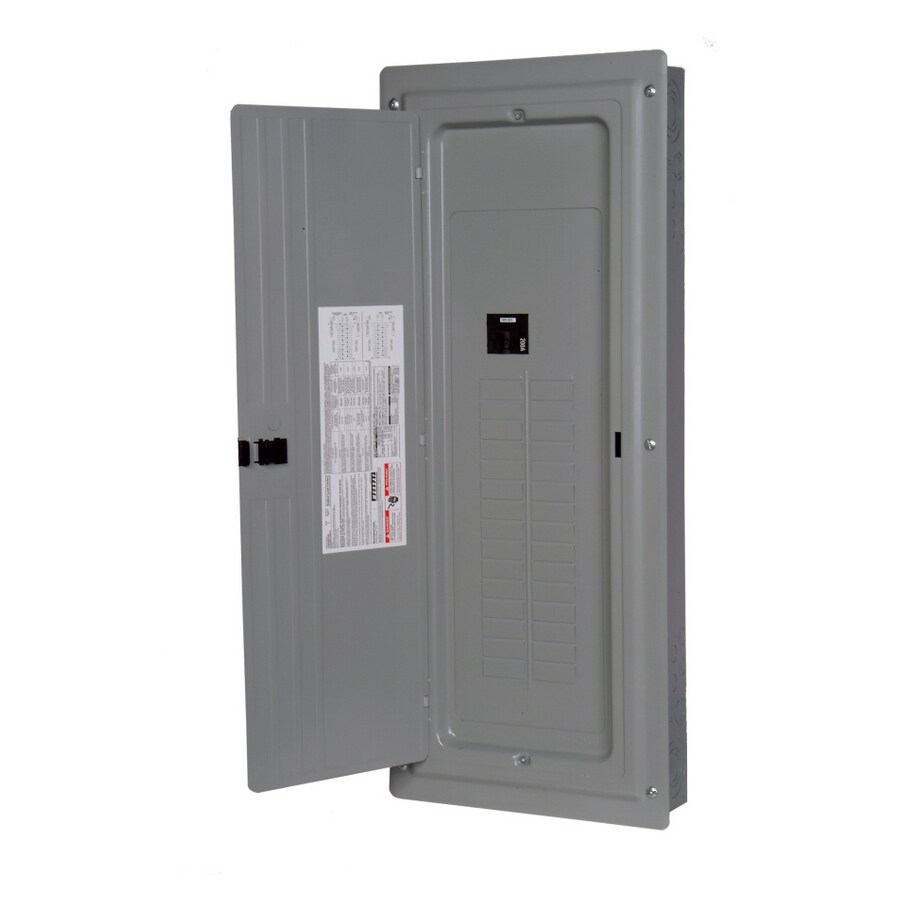
Murray
The 2010 Siemens/Murray recall covered specified products and date codes, not every panel. We can help identify the equipment and document whether it matches the recall.
Murray panel shown for identification; this photo does not establish recall status.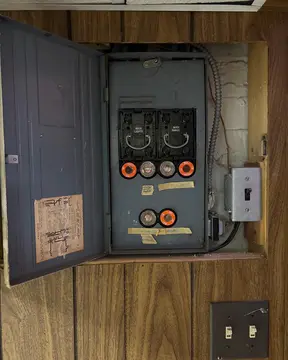
Older fuse panels
Fuses are not automatically unsafe. Overfusing, damage, corrosion, alterations or an insurer’s requirement may make replacement appropriate.
If you notice smoke, arcing, a burning odor or unusual heat, seek urgent assistance. Do not remove covers or handle internal components.
Out of breaker spaces?
A full panel may still have enough electrical capacity. Depending on its condition and the planned loads, the options are a replacement panel with more spaces or a properly supplied small subpanel.
More room for circuits
A larger panel provides more breaker positions. A subpanel can add positions where the existing equipment and supply are suitable. Neither option adds available power by itself.
Plan for a future 200-amp upgrade
Where suitable, a 200-amp-rated panel can be installed now and protected at the existing feeder or service rating. It can remain when the supply is upgraded later.
Panel replacement and service upgrade are different scopes. A future increase to 200 amps may still require feeders, service equipment and PG&E coordination.
Replacing a panel in a clothes closet.
Older panels are sometimes located inside clothes closets. A replacement breaker panel needs a compliant location outside the clothes closet, with the required access and working space.
Convert the old enclosure.
Where suitable and accepted by the inspector, the old panel interior is removed and its enclosure becomes a covered, accessible junction box.
Connect to the new location.
The feeder and branch circuits are extended. Local wall openings may be needed; the proposal identifies patching and painting responsibilities.
Relocate the panel.
The new panel is installed outside the clothes closet, the circuits are identified and the work is inspected.
The junction box remains accessible and cannot be buried behind a finished wall. A dedicated electrical closet is evaluated differently from a clothes closet.
Start with what the insurer actually requires.
Insurers may request an electrical evaluation or replacement when issuing or renewing coverage. Send the notice, deadline, property address and safely accessible panel-label photos so we can review the specific concern.
We can provide identification findings or documentation of completed work and inspection. The carrier decides whether that satisfies its coverage requirements.
What if my Murray panel is not part of the recall?
If the equipment does not match the recall, replacement is not required on that recall basis alone. We can provide a letter documenting the identification and findings for your insurer. Other defects or carrier requirements still need separate consideration.
Which products were covered by the 2010 recall?
Specified Siemens/Murray breakers marked 0610 or 0710, plus listed load centers and a meter combo with dates from June 23 through August 25, 2010. A faulty spring clip could cause a poor connection, overheating or arcing. Catalog numbers and installed breakers must be checked; panel age alone is not enough.
Can replacing just the breakers resolve the issue?
Sometimes, depending on the panel, bus condition, approved compatible parts and the insurer’s acceptance requirements. A breaker-only correction needs an equipment-specific review.
Request an estimate
Tell us about your project.
Share the property details, panel information and any insurance request or planned electrical work.